The Canberra Times Centenary Dinner
They had a century of front pages. We put them on the table
The Canberra Times turned one hundred, and the problem with a centenary is that the obvious solution is a slideshow. A hundred years of a city’s record, reduced to pictures on a screen behind the lectern while people eat. The paper deserved better than that, and so did a room that included the Prime Minister and the Governor-General.
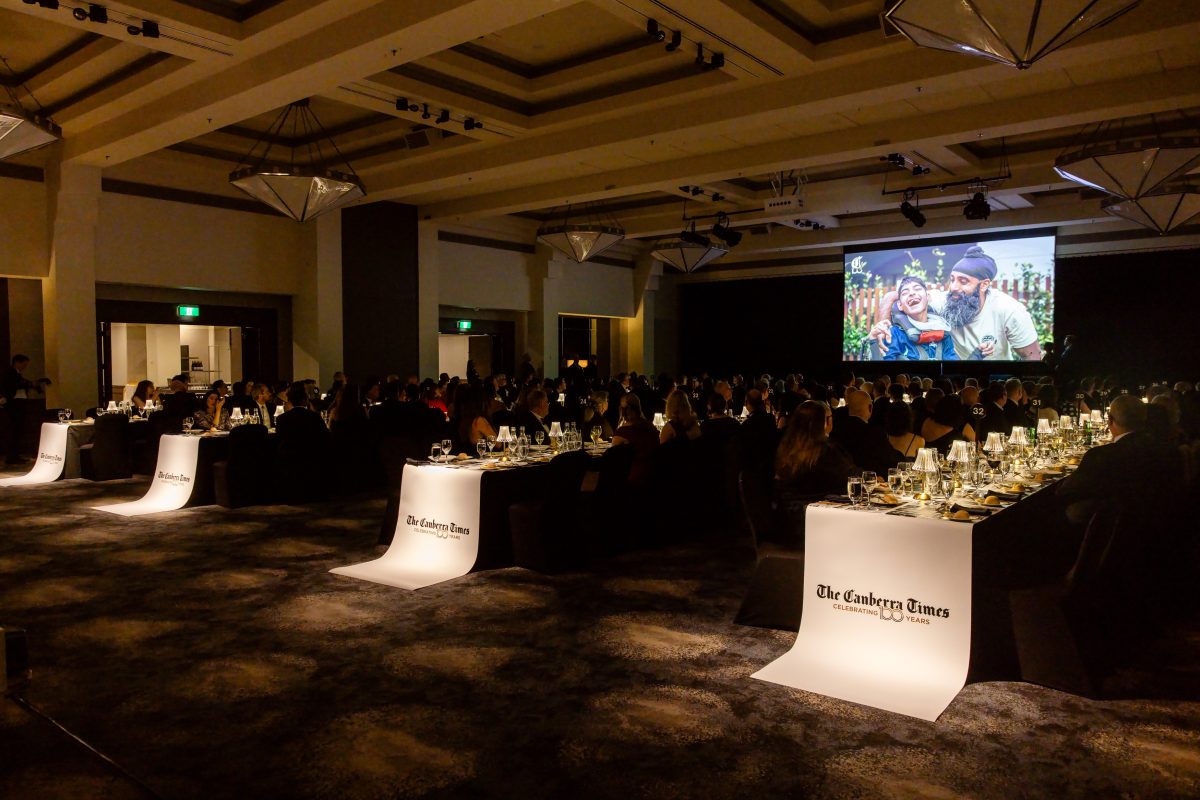
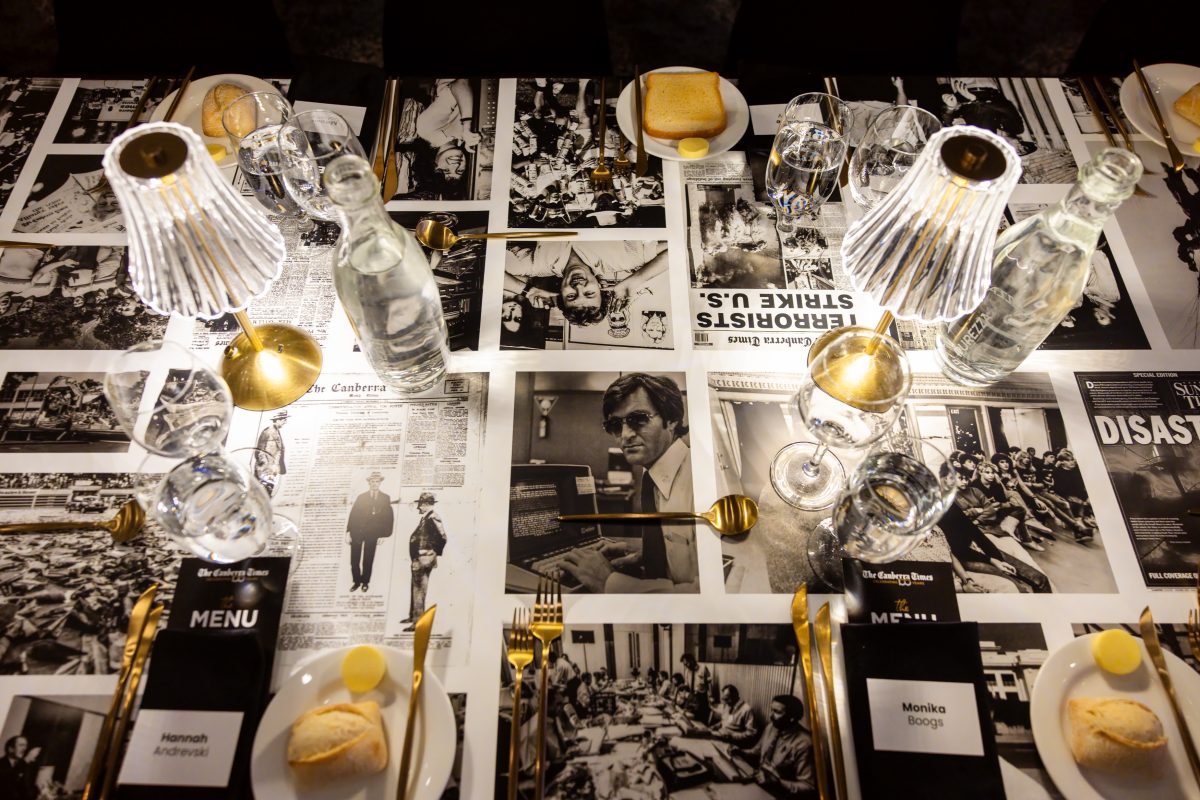
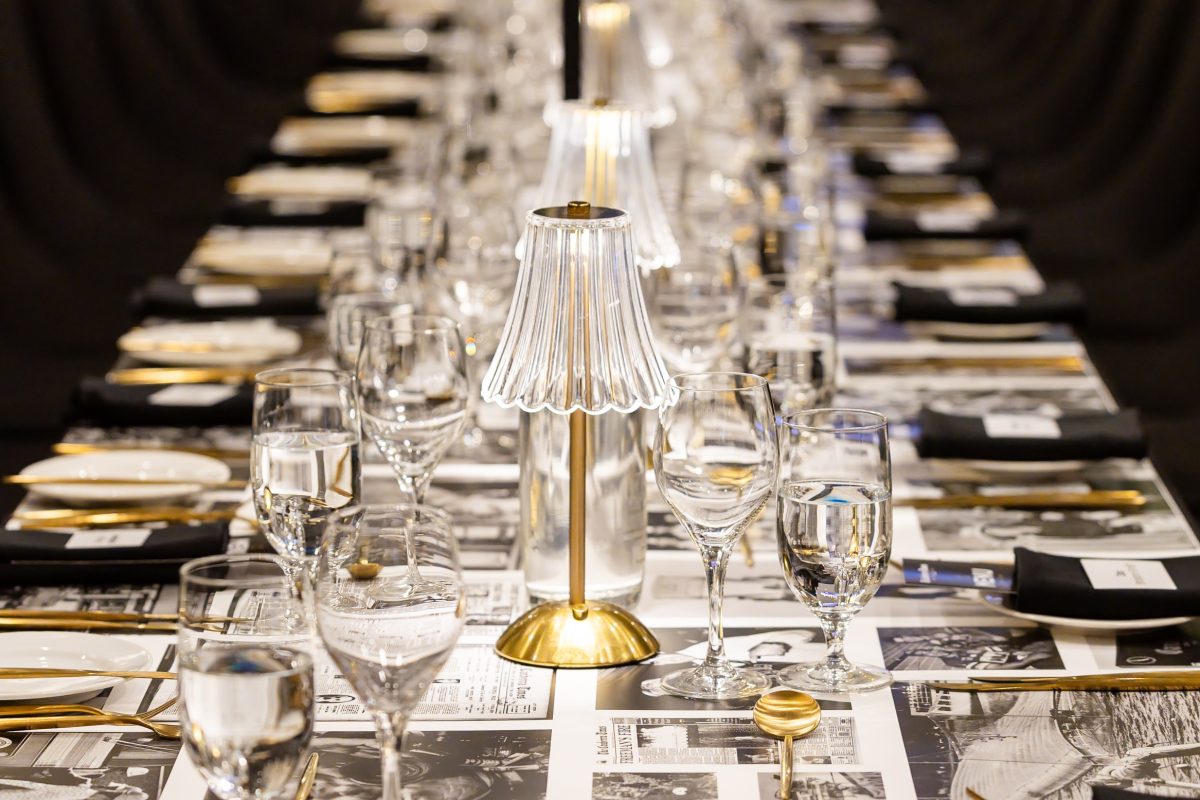
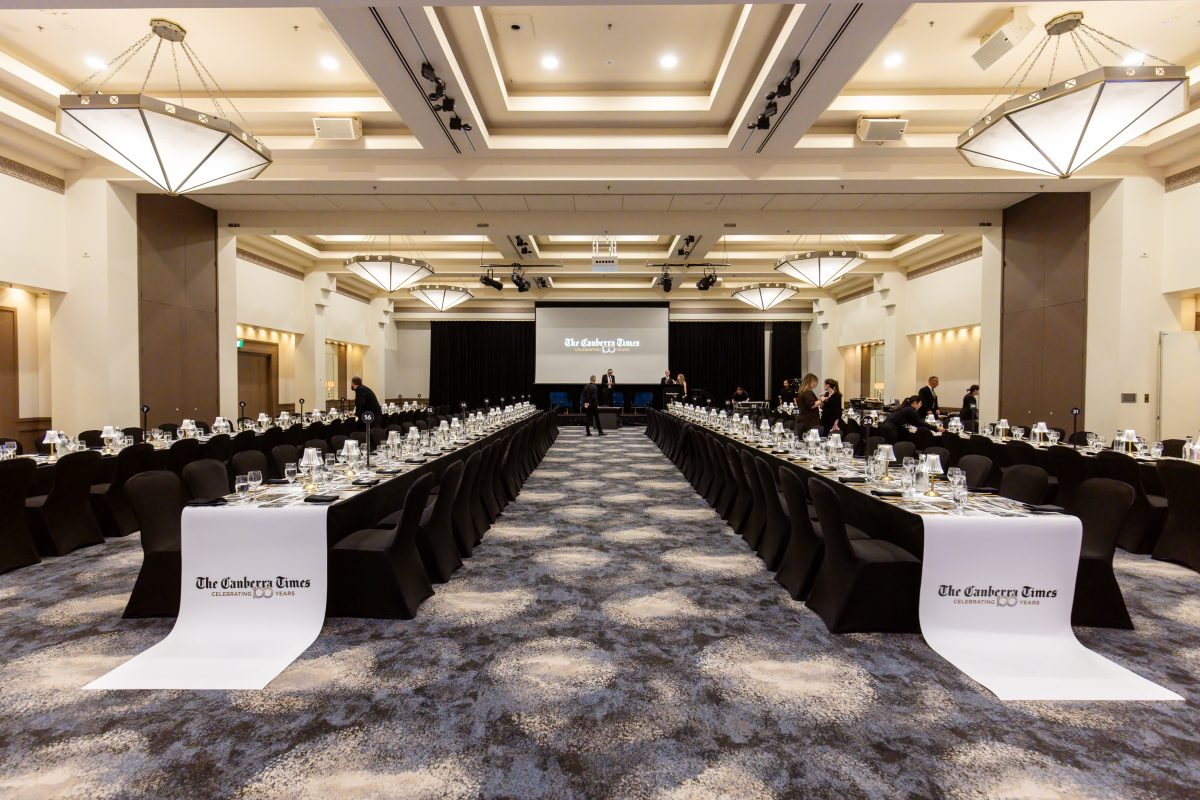
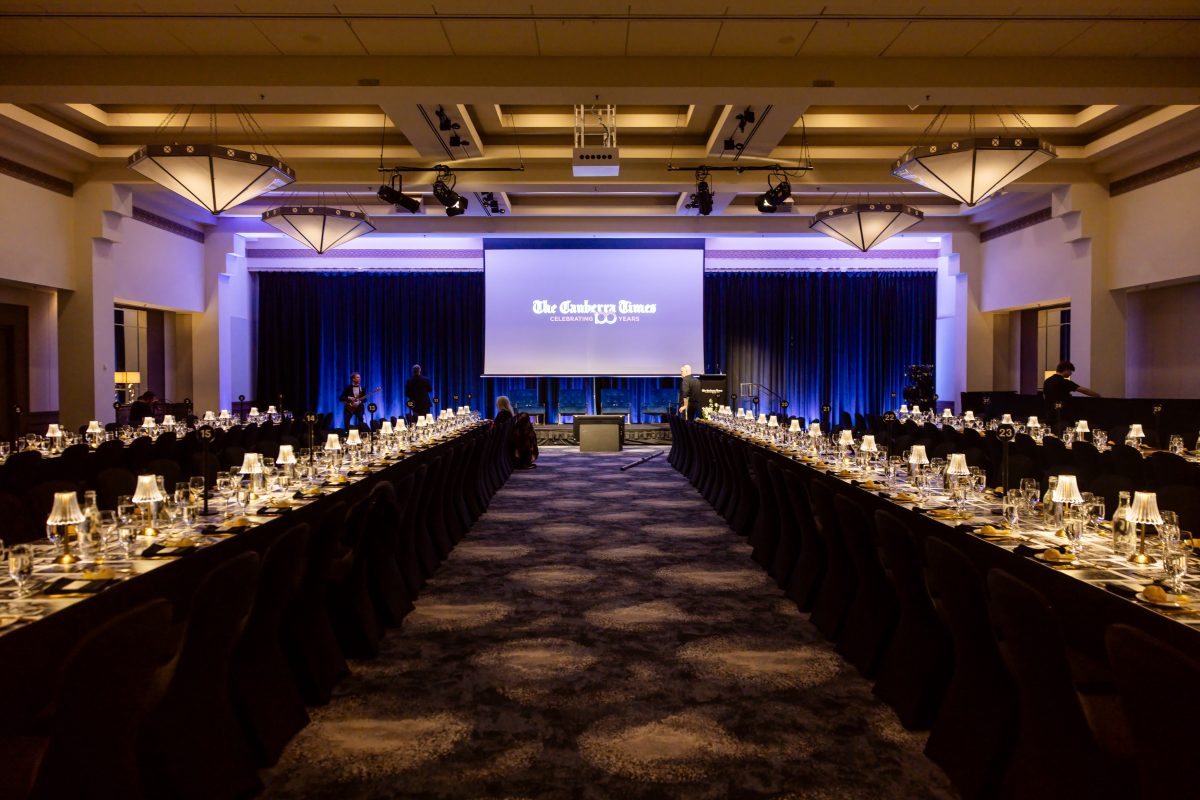
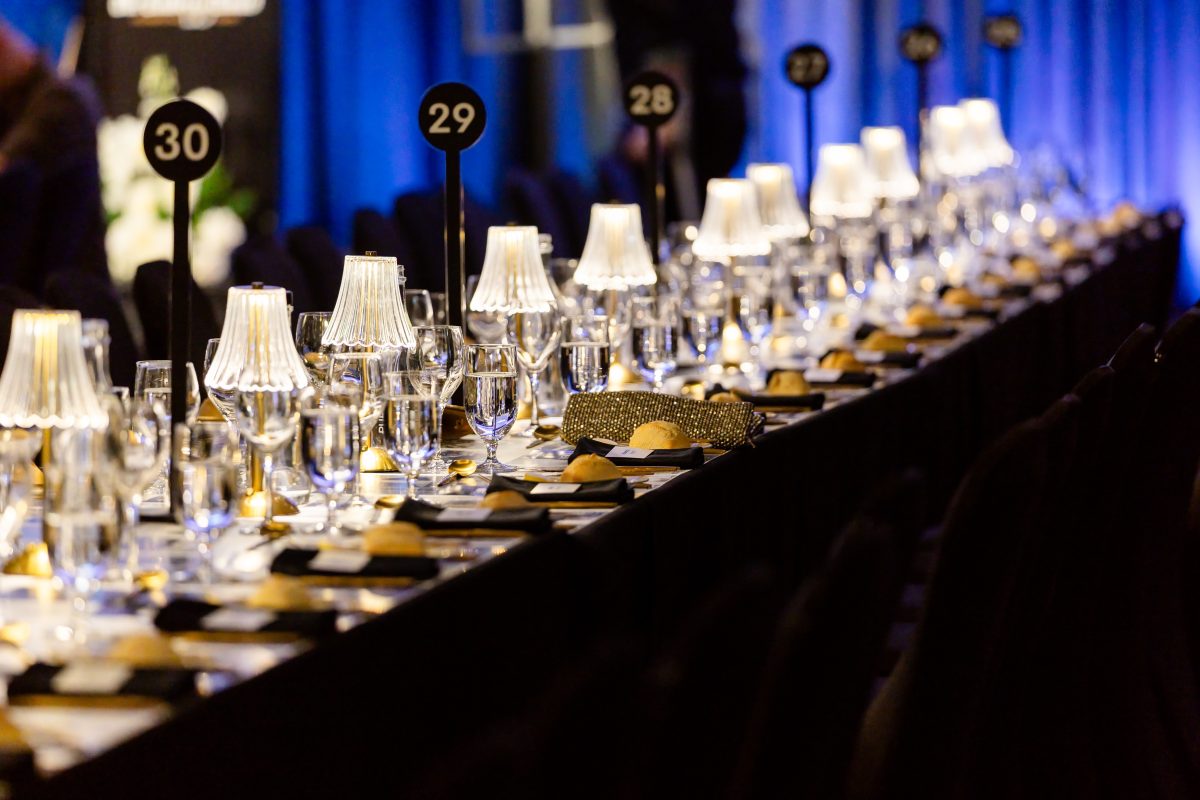
So the archive came off the screen and onto the table. Damsel and Sprout delivered the centenary dinner in the Federation Ballroom at the Hyatt, for 200 guests across four long banquet tables, each one running eighteen metres of printed newspaper articles down its centre. Black linen, gold lamps, gold cutlery, and a hundred years of front pages under the glassware.
Client: The Canberra Times
Year: 2026
Venue: Federation Ballroom, Hyatt Hotel Canberra
Format: Black tie centenary gala dinner
Audience: 200 guests, plus a pre-dinner welcome reception
What we delivered
- Concept creation, pre-production and client management
- Supplier and vendor management
- Event delivery, stage management, technical direction, bump in and out and all site logistics
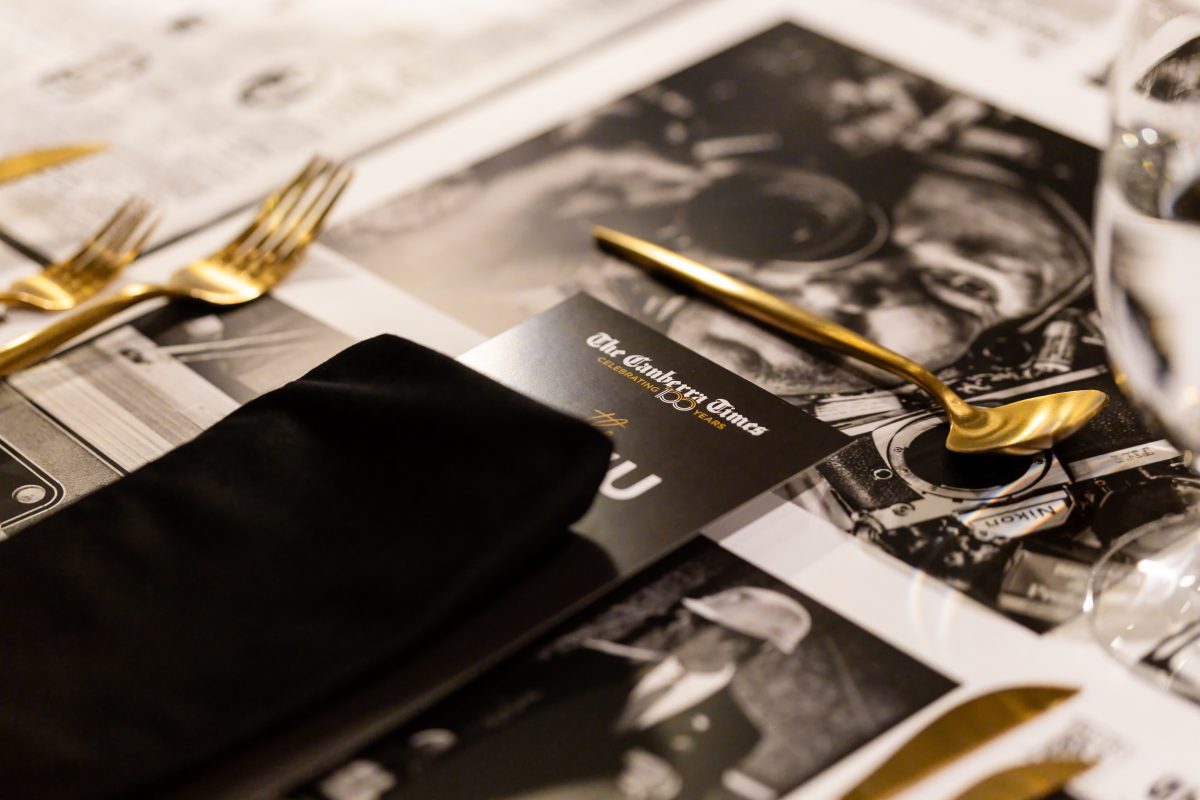
- Tablescape design and production: black linen and chair covers, gold table lamps, gold cutlery, custom menus and the custom printed table runners, produced to our direction from artwork drawn from the paper’s own archive
- Media wall, welcome signage, plinths and florals
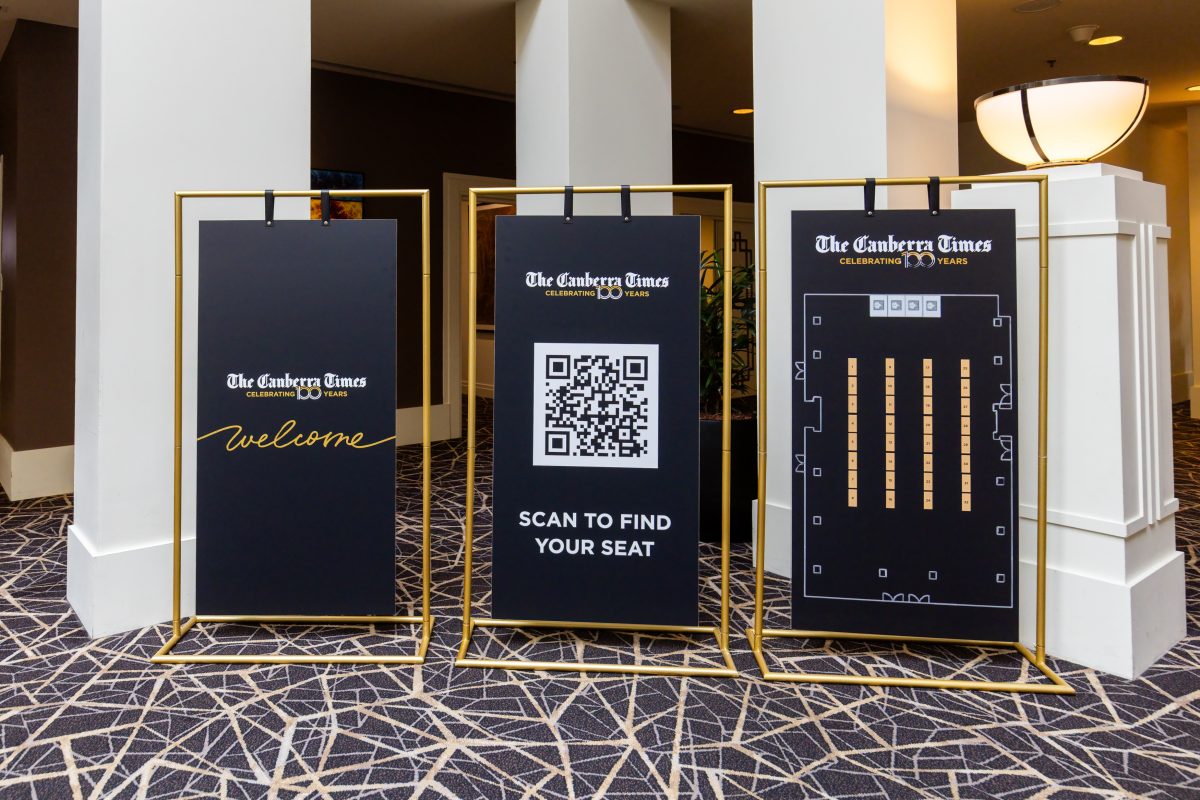
- Custom built QR code seating chart
- AV: lighting, audio, lectern, draping and staging
- Live acoustic musician across arrival, meal breaks and departure
A hundred years, readable from both sides
The runner is the whole idea: close to eighteen metres of the paper’s own front pages and photography printed down every table, , the key moments, the headlines and the photographs of a century in this city, with the masthead panel spilling off the end and onto the carpet, like the paper rolling off the printing press. The design problem nobody sees is orientation. Face everything one way and half the room spends the night reading upside down, so the artwork was split down the middle without a visible seam, half facing each side. Guests spent the evening reading the table, picking out a headline they remembered or a photograph of a Canberra that has since been built over.
Scan to find your seat
Two hundred people, thirty-two tables, and the usual answer is a printed seating board that is out of date the moment it is printed, and a queue in front of it. Instead, a QR code in a gold frame at the entrance took guests straight to a custom built find-your-seat page. Same information, no bottleneck at the door, updated to the minute and the room filled in a fraction of the time.
Four long tables, not sixteen rounds
A round table gala would have been the safe call and it would have shrunk the idea. Four unbroken runs of table instead, which is what gives the runner its length and the room its symmetry, lit so the gold lamps carry the eye all the way down. It is a harder room to service and a harder room to light. It is also the arrangement that puts the archive to work. On a long table everyone shares the same stretch of it, so the person opposite you is looking at the same headline you are, and the thing on the table becomes the thing you talk about.
Two journalists and a borrowed broadcaster
The evening was hosted by two of the paper’s own journalists rather than a professional MC, which is the right instinct for a newsroom’s own birthday and a real ask of people whose job is writing rather than holding a room. So a professional broadcaster was engaged to coach them before the night. Guest experience is not only what the room looks like. It is also whether the person on the microphone is set up to succeed.